








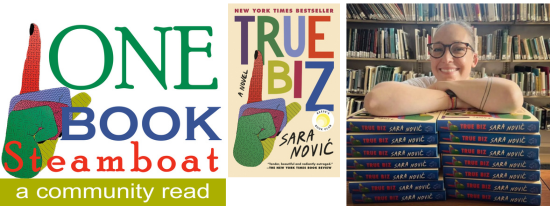
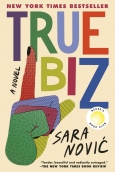
About the book: TRUE BIZ
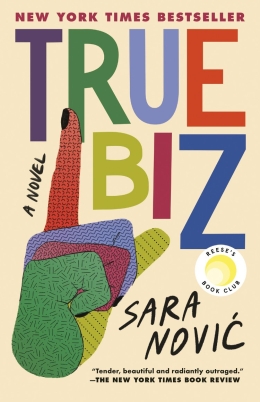
True biz (adj./exclamation; American Sign Language): really, seriously, definitely, real-talk
True biz? The students at the River Valley School for the Deaf just want to hook up, pass their history finals, and have politicians, doctors, and their parents stop telling them what to do with their bodies. This revelatory novel plunges readers into the halls of a residential school for the deaf, where they’ll meet Charlie, a rebellious transfer student who’s never met another deaf person before; Austin, the school’s golden boy, whose world is rocked when his baby sister is born hearing; and February, the hearing headmistress, a CODA (child of deaf adult(s)) who is fighting to keep her school open and her marriage intact, but might not be able to do both. As a series of crises both personal and political threaten to unravel each of them, Charlie, Austin, and February find their lives inextricable from one another — and changed forever.
This is a story of sign language and lip-reading, disability and civil rights, isolation and injustice, first love and loss, and, above all, great persistence, daring, and joy. Absorbing and assured, idiosyncratic and relatable, this is an unforgettable journey into the Deaf community and a universal celebration of human connection.
THE ACCOLADES
***2023 American Library Association Alex Award Winner
***BEST BOOKS OF 2022—Publisher’s Weekly, Washington Post, NPR, Booklist, Audible, Goodreads
***New York Times bestseller and Reese’s Book Club pick
THE REVIEWS
“Tender, beautiful, and radiantly outraged….This important novel should—true biz—change minds and transform the conversation.” — Maile Meloy, the New York Times Book Review (Editors’ Choice)
“Part tender coming-of-age story, part electrifying tale of political awakening, part heartfelt love letter to Deaf culture, True Biz is wholly a wonder. Sara Nović examines the ways language can include, exclude, or help forge an identity—as well as what it means to carve out a place for yourself in a world that sees you as other.”—Celeste Ng, New York Times bestselling author of Little Fires Everywhere
“This is my favorite kind of novel, fascinating and smart and brimming with contrasts. It’s a coming-of-age story but also one of anarchy and protest. It’s about the ways communities are bound but also the ways they bind. It’s about belonging versus conforming, individual strength alongside solidarity. I laughed. I learned. I entered a world I knew too little about, at once different from mine and of course the same. I will be recommending this book to absolutely everyone.”—Laurie Frankel, New York Times bestselling author of This Is How It Always Is and One Two Three
“Sara Novic is one of the best writers of my generation—not just the novelist of Deaf culture, but of human nature writ large. Do yourself a favor and get this book—it is inimitable.”—Ilya Kaminsky, author of Deaf Republic and Dancing in Odessa
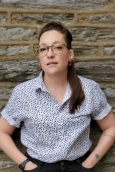
About the author: Sara Novic
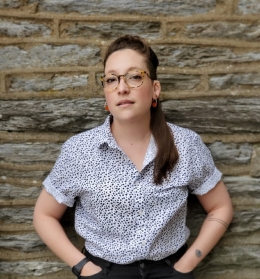
Sara Novic is the author of the New York Times bestseller and Alex Award-winner True Biz, America is Immigrants, and Girl at War, which also won the American Library Association’s Alex Award and was a finalist for the Los Angeles Times Book Prize. She holds an MFA in fiction and literary translation from Columbia University, and is an instructor of Deaf studies and creative writing. She lives in Philadelphia with her family.
In addition to her novels, peruse Sara Novic's short stories published in a variety of literary journals, essays and sports journalism here.
Additional Resources
- Learn ASL! Bud Werner Library has added American Sign Language to Mango, our language learning platform that's available free with your library card. Mango offers lessons for 70 global languages, including ESL and indigenous/endangered languages.
How to access American Sign Language lessons FREE through the library:
- Head to Mango Languages on the library website.
- Enter your library card number and password for remote access.
- Log In or Sign Up using an email and password. Click "I Agree" to the Data Consent Form. NOTE: This allows you to keep track of your progress, access the resource from other devices, and enjoy full functionality.
- Under "Pick a Language", click "See All" or search for American Sign Language.
- Start learning American Sign Language through Mango and ASL Inside! Enjoy Mango in your browser, or in a mobile environment by downloading the Mango Languages app for free at the Apple App Store or Google Play. ASL courses are best when used with a webcam.
- More free ways to study ASL! Use your library card to access this seven-part beginner ASL tutorial, American Sign Language Made Easy, on Kanopy.
- Bud Werner Library now has assisted listening in Library Hall! We offer portable devices to loan or bluetooth enabled connections to your own device for enhanced listening to our films and speakers.
- Need ASL interpretation for your meeting or event in Steamboat? Sign Language interpreters are trained to provide a linguistic and cultural interpretation between spoken languages and signed language. In this age of information and awareness, organizations are becoming more inclusive. Interpreters are part of the process of inclusivity. Jillian Chamberlain is Routt County and Northwest Colorado’s American Sign Language interpreter through Rural Auxiliary Services. She is available for all groups that may need her ASL interpreting services. To inquire about reserving ASL Interpreting Services, please submit the request form. Jillian is not available for legal or medical interpreting.
- Take 9 minutes to watch comedian and journalist Stella Young's viral TEDX talk I'm Not Your Inspriation, Thank you Very Much. Stella talks about Disability Culture, perceptions and inclusion, and her 2014 talk sent shockwaves around the world, becoming a catalyst for many paradigm shifts.
- Check out Barry Corbet's book Options, which was featured in the Full Circle documentary. You can always search for Options in the Bud Werner Library catalog and the Libby app. It is available as an eBook for download, and is viewable in a browser as well.
- Read more work by Sara Novic. In addition to her novels, peruse Sara Novic's short stories published in a variety of literary journals, essays and sports journalism here.
-
Learn more from Sara Novic. Peruse the archives and/or sign up for signs + wonders, Sara Novic's monthly Substack email that features "musings and news from the desk of your friendly neighborhood deaf author-human."
- Looking for resources in the Yampa Valley? These eight organizations serve disabled populations in Routt Counties and beyond: Colorado Rural Auxiliary Services, Horizons, Northwest Colorado Center for Independence, Routt County Department of Human Services, STARS, Steamboat Springs School District (Special Education), True North, Yampa Valley Autism
One Book Steamboat Events
-
 Thursday, January 4, 2024 - 12:00am to 11:45pmLibrary Front Desk
 -
 Tuesday, January 16, 2024 - 6:30pm to 8:30pmLibrary Hall
 -
 Sunday, January 21, 2024 - 12:00am to 11:45pmVirtual Event -- Access Info Below
 -
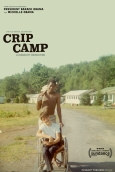 Monday, January 29, 2024 - 6:30pm to 8:15pmLibrary Hall
 -
 Wednesday, January 31, 2024 - 6:30pm to 8:00pmLibrary Hall
 -
 Tuesday, February 6, 2024 - 12:00pm to 1:00pmConference Room - Administration Wing
 -
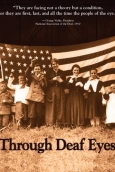 Sunday, February 11, 2024 - 12:00am to 11:45pmVirtual Event -- Access Info Below
 -
 Friday, February 23, 2024 - 12:00am to 11:45pmVirtual Event -- Access Info Below
 -
 Thursday, February 29, 2024 - 6:30pm to 8:00pmLibrary Hall
 -
 Monday, March 4, 2024 - 6:30pm to 7:30pmMain Library 2nd Floor
 -
 Wednesday, March 13, 2024 - 6:30pm to 7:30pmVirtual Event via Crowdcast
 -
 Thursday, May 9, 2024 - 7:00pm to 8:00pmLibrary Hall